


From interactive marketing to AI-built virtual worlds
From interactive marketing to AI-built virtual worlds, immersive technologies are reshaping how businesses connect with customers — and the future has already begun.
Introduction: The Shift From Information to Experience
For years, digital transformation was about delivering information — websites, videos, emails, and social media posts that told stories, explained products, and guided decisions. But 2025 marks a clear turning point: customers no longer want to read about a product or service — they want to experience it.
Enter immersive AI — the fusion of artificial intelligence with augmented reality (AR), virtual reality (VR), spatial computing, and generative content. Together, these technologies are creating environments that feel alive, responsive, and deeply personal. And according to current Google Trends data, searches for phrases like “AI virtual experience,” “AR marketing,” and “immersive content creation” have exploded in recent months — proving that the shift from passive consumption to active immersion is here to stay.
For businesses and marketers, this evolution isn’t optional — it’s the next competitive frontier.
1. Why Immersive AI Is Exploding Right Now
Several forces are converging to make immersive AI the next big wave:
- Generative AI maturity: Tools that generate text, visuals, environments, and even 3D assets on demand have become mainstream. This drastically lowers the cost and complexity of creating immersive content.
- Accessible hardware: AR glasses, VR headsets, and spatial computing devices are no longer niche. Consumer adoption is accelerating as hardware becomes lighter, cheaper, and more powerful.
- Faster connectivity: With 5G and edge computing, streaming complex virtual environments is seamless and responsive, even on mobile devices.
- Consumer expectations: Gen Z and younger millennials increasingly prefer experiences over information. They want to try, interact, and explore — not just scroll.
This intersection is why 2025 is shaping up to be the “iPhone moment” for immersive technology — a time when the technology transitions from curiosity to necessity.
️ 2. Where Immersive AI Is Already Transforming Business
Immersive AI isn’t a future dream — it’s already reshaping multiple industries. Here are the most impactful use cases for businesses and marketers:
Retail & E-Commerce: Virtual Try-Ons and AI-Guided Shopping
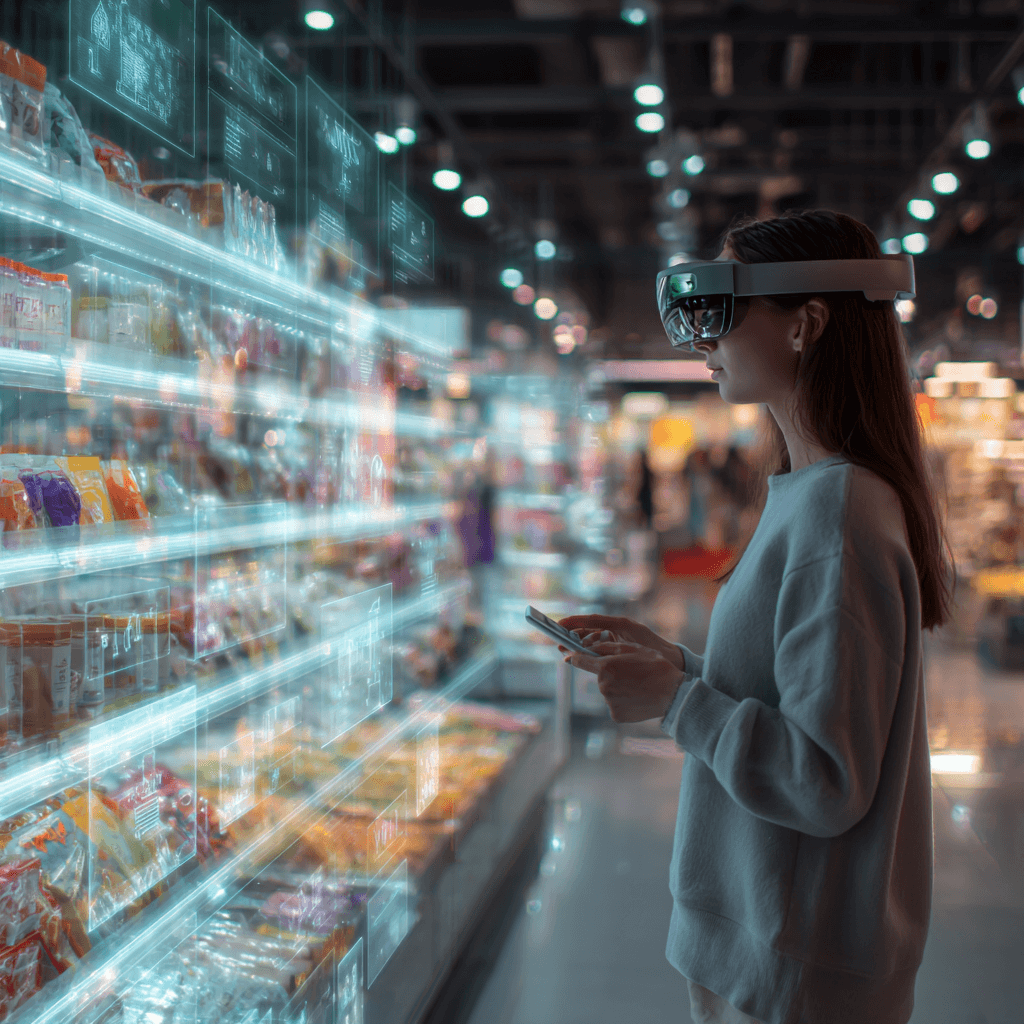
Imagine customers trying on clothes virtually through their phone camera or exploring a 3D showroom where an AI avatar guides them to products tailored to their preferences. Retailers like Nike and Sephora are already using AR try-on technology, and AI is now enhancing these experiences with personalization and predictive recommendations.
Tourism & Real Estate: Explore Before You Book
Hotels, resorts, and property developers are building immersive tours that let potential clients walk through destinations or properties before booking. Combined with AI narrators and interactive guides, these experiences reduce decision hesitation and boost conversion rates.
Education & Training: Learn by Doing
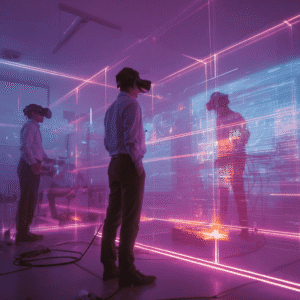
From corporate training simulations to medical practice labs, AI-powered VR environments are redefining how we learn. Businesses are using these tools to upskill employees in realistic, risk-free scenarios that improve retention and performance.
Marketing & Storytelling: Campaigns That Live in 3D
Brands are now creating immersive worlds around their campaigns — not just videos and landing pages. Picture launching a new product inside a virtual experience where customers can interact with features, unlock hidden content, or chat with AI characters representing your brand.

3. Challenges Businesses Need to Consider
While the opportunities are exciting, immersive AI also brings new challenges that marketers and business leaders must address:
- Cost & complexity: Although generative AI reduces production time, building fully immersive environments still requires investment in design, hardware, and infrastructure.
- Privacy & ethics: Spatial computing introduces new data risks — from tracking user movement to recording voice and biometric data. Transparent consent and data protection practices are essential.
- Content overload: As more brands create immersive content, the competition for attention will intensify. The winners will be those who deliver meaningful experiences, not just flashy tech demos.
- Accessibility: Not all users have VR headsets or high-speed internet. Ensuring that immersive campaigns also have “2D alternatives” keeps them inclusive and widely accessible.
4. What’s Next: The Future of Immersive AI in Marketing
The next evolution of immersive AI will go far beyond VR headsets and AR filters. Here’s what to expect in the coming years:
- AI Agents in 3D Worlds: Intelligent avatars will act as brand ambassadors, support agents, or sales assistants — offering personalized interactions 24/7.
- Mixed Reality Experiences: AR and VR will merge into continuous, hybrid experiences that blend physical and digital spaces.
- No-Code Immersive Creation: Businesses will soon be able to create immersive campaigns with drag-and-drop tools, making the technology accessible to non-technical marketers.
- Hyper-Personalized Experiences: AI will tailor immersive content in real-time based on a user’s behavior, preferences, and context — creating unique experiences for every visitor.
The businesses that start experimenting now will have a significant advantage in mastering this new medium before it becomes mainstream.
✅ Conclusion: The Time to Experiment Is Now
Immersive AI is not a futuristic concept — it’s already reshaping how customers explore, learn, shop, and connect with brands. And like every major shift in digital history, the early adopters will reap the biggest rewards.
Start small: build an interactive product demo, host a virtual showroom, or integrate an AI assistant into an AR campaign. Each experiment builds internal knowledge and customer insight — and positions your brand as an innovator in the eyes of the market.
Because in 2025 and beyond, businesses that create experiences will outshine those that simply share information.